What is Autism?
Autism Spectrum Disorder - ASD
What is Autism Spectrum Disorder?
Autism is exactly that — a spectrum. Every autistic person experiences the world differently, and no two individuals are the same. What one person finds challenging may not be a challenge for another. Some autistic people are verbal, while others are non-verbal. Some experience sensory sensitivities, such as with food, while others do not.
The autism spectrum is broad and diverse, and understanding this is essential. Many misunderstandings about autism come from not realising just how wide and varied the spectrum truly is.
Autism is a neurodevelopmental condition that affects how a person communicates, interacts with others, and processes the world around them. Autistic people may experience differences in social communication and interaction, and some may display repetitive behaviours or have sensory sensitivities, such as to sounds, lights, textures, or touch.
Signs of Autism in Younger & Older Children
As parents, it’s helpful to know that signs of autism can look different depending on a child’s age, and every child will show them in their own way. In younger children, you might notice things like not responding to their name, avoiding eye contact, or not smiling back when you smile at them. Some little ones can become very upset by certain sounds, smells, or tastes, and may repeat movements such as hand flapping, finger flicking, or rocking. You might also notice less talking than other children, limited pretend play, or repeating the same words or phrases.
As children grow older, the signs can change. You may see your child struggling to understand what others are thinking or feeling, or communicating in ways that feel unusual, such as repeating phrases or talking “at” people rather than with them. Older children may rely heavily on routines and become very distressed when things change, develop intense interests in certain topics, or find it hard to make friends and prefer to be on their own. They may take things very literally, struggle to express how they feel, or become very upset when asked to do something. Many parents recognise these differences over time, and understanding how signs can shift with age can help us better support our children.
Autism in Girls
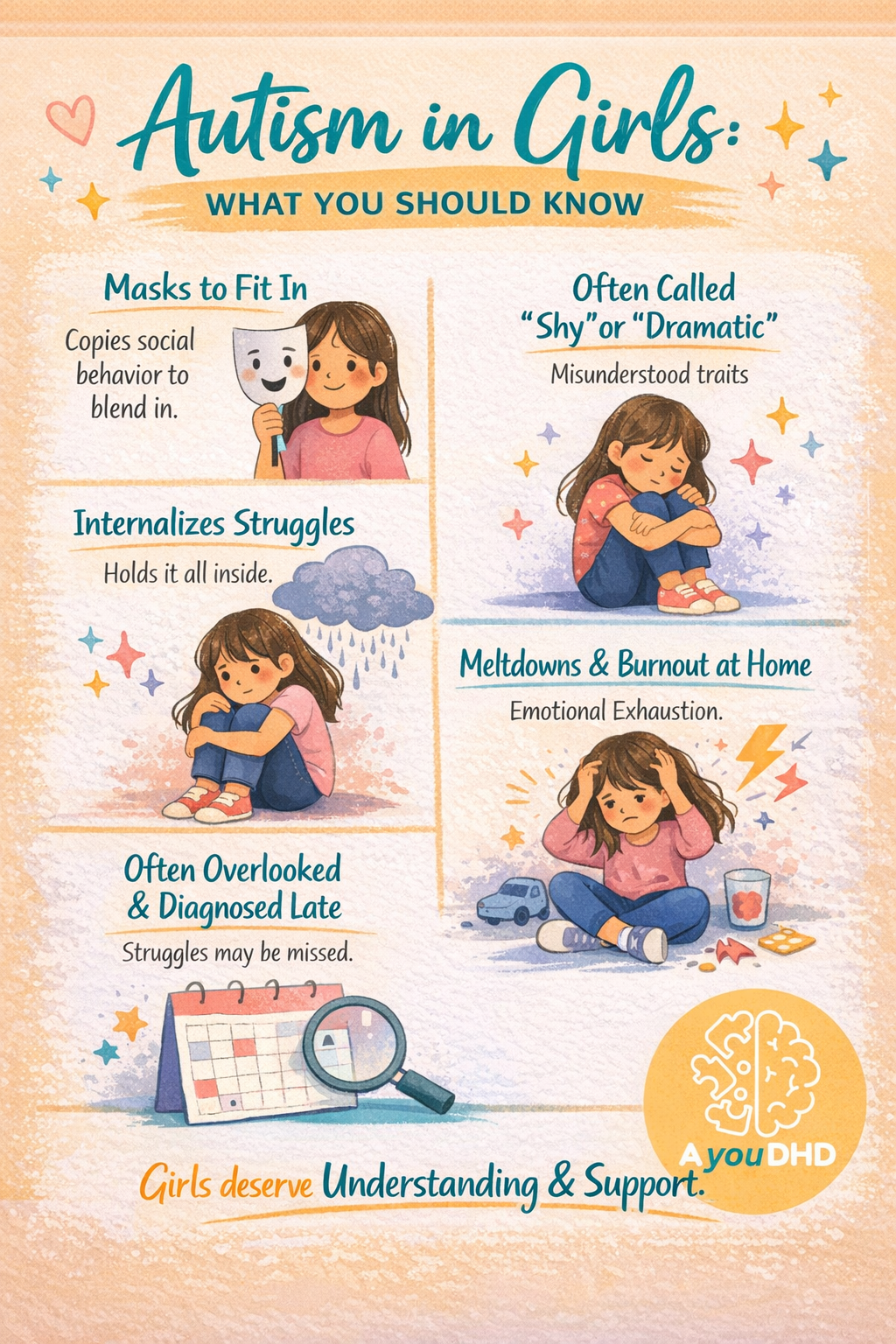
As parents, many of us are surprised to learn that autism can look quite different in girls than it does in boys. Because of this, girls are often missed or diagnosed later. Many autistic girls are very good at masking — they learn to copy how other children talk, play, and behave so they can fit in. From the outside, they may seem “fine” at school, but this can be exhausting for them and often leads to emotional overwhelm at home.
In younger girls, signs might be more subtle. Instead of obvious repetitive behaviours, you might notice intense interests that seem socially acceptable, like animals, books, dolls, or fictional characters. They may be more quiet or shy rather than disruptive, and they often want to please adults. Sensory sensitivities are still there, but girls may hide their discomfort until they feel safe, such as at home.
As girls get older, the differences can become clearer. They may struggle deeply with friendships, even though they want to connect. Friendships can feel confusing, draining, or short-lived. Anxiety, perfectionism, emotional shutdowns, or meltdowns at home are common, especially after a long day of holding everything together. Many parents notice their daughter seems “coping” at school but falls apart once she’s home.
What’s important to remember is that autism in girls isn’t less real — it’s just often less visible. Trust your instincts as a parent. If something feels different, even if others don’t see it yet, that understanding can be the first step toward getting the right support for your child.
What Can Help?
As a parent, I know how overwhelming it can feel trying to support our kids in ways that actually help. Over time, many of us discover that certain tools can make a big difference with sensory regulation, communication, and focus. Things like weighted blankets or lap pads, fidget toys (putty, Tangles, stress balls), calming lights, chew tools, and visual or tactile items can really help our kids manage anxiety, build motor skills, and feel more comfortable in their bodies.
For calming and easing anxiety:
Weighted items like blankets, lap pads, vests, or even weighted stuffed animals can provide deep pressure that helps calm the nervous system. Soft, calming lighting—such as bubble tubes, projectors, or mood lamps—can create a soothing environment, especially during downtime. Noise-canceling headphones can also be a lifesaver for reducing overwhelming sounds.
For sensory input and motor skills:
Fidget toys like stress balls, Tangles, putty, or fidget pads give kids something safe to touch and move, which can really help with self-regulation. Textured mats or liquid floor tiles add both tactile and visual input and can be fun to explore. Chew tools (like chewies) support oral sensory needs and can help reduce anxiety. Movement tools such as mini trampolines or resistance bands offer that much-needed “heavy work” input.
For focus and communication:
Visual supports like timers, visual schedules, or story-based apps can make routines easier to understand and follow. Simple interactive toys with pieces—like Mr. Potato Head—are great for encouraging language, labeling, and back-and-forth interaction. Light-up games like BrainBolt® can help build focus and memory in a playful way.
Creating calming sensory spaces:
Small tents or dark dens can give kids a cozy, safe place to retreat when things feel like too much. Some families also create sensory rooms by mixing calming lights, soft seating, and other favorite sensory tools to make a space that feels comforting and supportive.
Every child is so different, and what works for one may not work for another. If possible, it’s always helpful to check in with an occupational therapist or healthcare professional to find tools that best fit your child’s unique sensory needs. You’re not alone in figuring this out—most of us are learning as we go. 
I have some Products that I have tried and tested with my own children through the Helpful Products page.
I have also created an Emotional Regulation Toolkit that comes with a regulation chart that you can personalise with your child.